

Former Members

Gürkan Aydemir
Gürkan Aydemir received the B.S., M.Sc. and Ph.D. degrees in electrical and electronics engineering, in 2012, 2014 and 2020 respectively, from Bogazici University, Istanbul, Turkey. His thesis titled "Machine health monitoring for cyber-physical systems", was supervised by Prof. Burak Acar. From 2018 to 2019, he was a Visiting Student Researcher with the Georgia Institute of Technology. He is currently a research assistant in Department of Electrical and Electronics Engineering, at Bursa Technical University.
Coşkun Mermer
Coşkun Mermer received the Ph.D. degree in Electrical and Electronics Engineering from Bogazici University in 2019. His thesis titled "Unsupervised Learning of Word Alignments for Statistical Machine Translation" was supervised by Prof. Murat Saraçlar and Ruhi Sarikaya. He is currently working as a Chief Researcher at TÜBİTAK BİLGEM, Gebze.
Batuhan Gündoğdu
Batuhan Gundogdu received his PhD with his thesis titled “Keyword Search for Low Resource Languages", supervised by Prof. Murat Saraçlar, in 2018. Until 2020, he remained an active member of BUSIM/SPG, working as a post-doctoral researcher for the TUBITAK Project having the same name with his thesis. Since 2019, he’s been serving as an Assistant Professor at the National Defense University Naval Academy.
Neda B. Marvasti
Neda B. Marvasti completed her PhD in BUSIM/VAVLAB in 2017 working on CaReRa project. Her thesis title was ”Content Based Medical Image Retrieval” supervised by Prof. Burak Acar. She is currently a postdoctoral researcher in the Department of Computer Science at Aalto University (PML group), Espoo, Finland, working on Bayesian machine learning algorithms.
Sezer Ulukaya
Sezer Ulukaya (B.Sc. Ankara University, M.Sc. Bahçeşehir University, both high honors) received Ph.D. degree in Electrical and Electronics Engineering at Boğaziçi University in 2017. His thesis titled “Time-Frequency and Time-Scale Analysis, Decomposition and Classification of Adventitious Pulmonary Sounds" was supervised by Prof. Yasemin P. Kahya. He won the first place in the scientific challenge on “Respiratory Signal Processing”, a competition sponsored by International Federation for Medical and Biological Engineering (IFMBE) in 2017. From 2013 to 2018, he worked as a research assistant and lecturer in the Department of Electrical and Electronics Engineering at Trakya University. Since 2018, he is vice chair and assistant professor in the same department. His research interests are in pattern recognition, machine learning and signal processing with applications to facial biometrics, lung acoustics and gait analysis.

Rıfat Volkan Şenyuva
Rıfat Volkan Şenyuva received the M.Sc. and the Ph.D. degrees in the Electrical-Electronics Engineering, in 2009 and 2016, respectively from Boğaziçi University, Istanbul, Turkey. His Ph.D. dissertation entitled “The Sparse Signal Recovery Algorithms from Incomplete and Perturbed Data” was supervised by Prof. Emin Anarım. From 2016 to 2018, he worked in the NETAS Telecommunication Inc (http://www.netas.com.tr/en/home-page/) as a software development engineer and a researcher to develop web services that utilize machine learning algorithms to virtualize real web services in the service virtualization project funded by the TUBİTAK TEYDEB 1501-Industrial R&D Projects Grant Program. Since 2018, he has been afaculty member in the Department of Electrical-Electronics Engineering at Maltepe University, Istanbul, Turkey. His research interests are sparse signal recovery, synchronization in OFDM, and multidimensional harmonic retrieval.
Erinç Dikici
Erinç Dikici was a member of BUSIM/SPG between 2006-2015. He received his PhD with his thesis titled "Supervised, Semi-Supervised and Unsupervised Methods in Discriminative Language Modeling for Automatic Speech Recognition", supervised by Prof. Murat Saraçlar, in 2016. Since then, he has been working as a speech scientist at SAIL LABS Technology [5], Vienna, Austria.
Sinem Aslan
Sinem Aslan received her B.Sc. in Electronics Engineering at Ankara University, her M.Sc. and Ph.D. degrees in Computer Science from Ege University. She completed her Ph.D. titled "Semantic Interest Point Detection", co-advised by Profs. Bülent Sankur and Turhan Tunalı, in 2016. During her Ph.D. studies, she held visiting position at BUSIM laboratory. She had postdoctoral research positions in the Imaging and Vision Laboratory, Department of Informatics, Systems and Communication at the University of Milano-Bicocca (2017-2018), in the European Centre for Living Technology at the Ca’ Foscari University of Venice in Italy (2018-2020). Sinem Aslan is currently a research assistant in International Computer Institute of Ege University, and a research fellow in DAIS of Ca’ Foscari University of Venice. Her research interests are in the areas of pattern recognition, computer vision and machine learning, with emphasis on semantic scene understanding and analysis of cultural heritage.
Doğaç Başaran
Doğaç Başaran received his Ph.D. degree from the Department of Electrical and Electronics Engineering at Boğaziçi University in 2015. From November 2014 to October 2016, he worked as a research engineer at NETAS Telecommunications on multimedia communications. Following that he was a postdoctoral researcher at Télécom Paristech in Paris (France) working on speaker diarization and representation learning for audio for over a year and then at IRCAM working on automatic melody extraction in the framework of the Dig That Lick project until May 2019. He is currently a research scientist at Audible Magic LLC based in London. His research interests mainly include audio/music signal processing, Bayesian and approximate inference, machine learning for signal processing and deep learning methods.
Cemil Demir
I completed my Phd under the supervision of Murat Saraçlar and Ali Taylan Cemgil in 2014 while I was employed as a Chief Researcher at TUBITAK BILGEM Speech and Language Processing Laboratory. I worked on Single-Channel Speech-Music Separation Problem for improving Robust ASR Systems in my PhD study. Presently, I am the head of Research at E-Learning Startup Company Voys AI in Istanbul where I focus on Automatic Speech Scoring and Pronunciation Evaluation Problems for Mobile E-Learning applications. I have also expertise on various alternate speech technologies such as E-Learning Technologies for Peak Games. Speech Synthesis Problem for the Audiobook Generation (Deepzen Co.) Speech Enhancement Technology (Babblelabs Inc.).
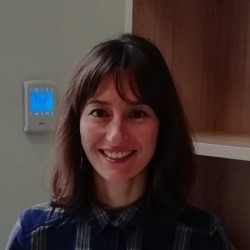
Oya Celiktutan
Oya Celiktutan was a member of the BUSIM Laboratory between 2005 and 2013. She received the MSc degree and the PhD degree from the Department of Electrical and Electronics Engineering, Bogazici University in 2008 and 2013, respectively. In parallel with her PhD, she was a visiting researcher at the National Institute of Applied Science of Lyon, France, and her PhD thesis titled "Structured and Sequential Representations for Human Action Recognition" was supervised by Prof Bulent Sankur and Dr Christian Wolf. After that, she spent 5 years as a postdoctoral researcher at top-tier universities in the United Kingdom, including Queen Mary University of London (2013-2015), University of Cambridge (2015-2017), and Imperial College London (2017-2018). In 2018, she joined the Department of Engineering, King's College London, where she is currently a Lecturer (Assistant Professor) and the Head of the Social AI & Robotics (SAIR) Laboratory in the Centre of Robotics Research. Her research interests centre around on computer vision and machine learning applied to human behaviour understanding, social signal processing, and human-robot interaction. In particular, her laboratory aims to develop smart algorithms for learning multimodal representations of human behaviour purely from data and synergistically integrating the learned models into the perception and control of real-world systems such as humanoid robots. So far, her laboratory's research has been supported by UKRI Engineering and Physical Sciences Research Council and Toyota Motor Europe.
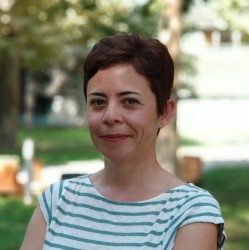
İpek Şen
Ipek Sen received the B.S., M.S., and Ph.D. degrees in Electrical and Electronics Engineering in 2002, 2005 and 2013, respectively, from Bogazici University. She was a teaching assistant in the same department from 2002 to 2013. During her graduate studies, she designed and implemented hardware for multichannel pulmonary data acquisition and developed algorithms for pulmonary sounds analysis. Her main research interests are mathematical modeling of multichannel pulmonary sounds data, detection of adventitious pulmonary sound components associated with pathological conditions, estimation of air flow rate from pulmonary sounds, and developing machine learning algorithms for classification of pulmonary conditions so as to aid clinical diagnosis. From 2014 to 2016, she worked in Electrosalus Inc. to develop a mobile intelligent stethoscope connected to the cloud, for which she and Prof. Yasemin Kahya hold European and US patents. Since 2017, she has been a faculty member in the Department of Electrical and Electronics Engineering at Istanbul Bilgi University.
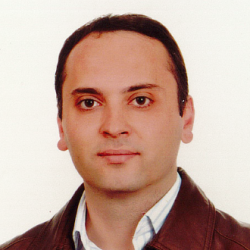
Osman Büyük
Osman Büyük was a member of BUSIM/SPG between 2005-2011. He received his B.Sc. degree from Bilkent University, his M.Sc. degree from Sabancı University and his Ph.D. degree from Boğaziçi University in 2003, 2005, and 2011, respectively, all in electrical and electronics engineering. He completed his PhD with his thesis titled “Telephone-based text-dependent speaker verification", supervised by Prof. Levent Arslan. He worked at SESTEK Conversational Solution Technology Company during 2005-2012. In the 2013-2020 period, he served as an Assistant Professor at the Kocaeli University Electronics and Communications Engineering Department. Now he is an Associate Professor in the Department of Electrical and Electronics Engineering at İzmir Demokrasi University. His research interests include machine learning and speech/natural language processing.
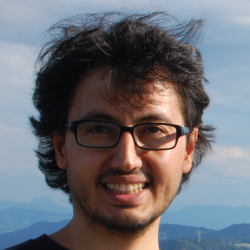
Haşim Sak
Haşim Sak completed his Ph.D. in 2011, supervised by Professors Tunga Gungor and Murat Saraclar. He is currently working on automatic speech recognition in Google speech team.

İmran Ergüler
Imran Erguler received the BSc, MSc, and PhD degrees in electrical and electronics engineering from Bogazici University-Istanbul, Turkey, in 2003, 2005, and 2011, respectively. His Ph.D. dissertation entitled “Security and Privacy Analysis of Authentication Protocols in RFID Systems” was supervised by Prof. Emin Anarım. He has been a chief researcher at the National Research Institute of Electronics & Cryptology TUBITAK BILGEM, in Kocaeli, Turkey since 2005. His primary research interests include cryptography, security for signal processing, privacy and network security.
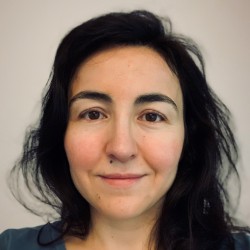
Hatice Çınar Akakın
Hatice Cinar Akakin received her PhD degree in 2010 from the EE department of Bogazici University under the supervision of Professor Bulent Sankur. She focused on computer vision and machine learning areas during her PhD. After graduation, she worked as a post-doctoral researcher at The Ohio State University in Biomedical Informatics Department until the end of 2011. She developed algorithms for cell segmentation and classification tasks. In 2012, she joined Anadolu University and served as an assistant professor until 2016. Then, she continued her career as a Machine Learning Scientist in Carl-Zeiss (USA) from 2016 to 2019. Currently, she is with Imbio LLC (USA) as a Machine Learning Scientist and enjoying developing Deep Learning solutions to analyze lung/cardiac CT data.
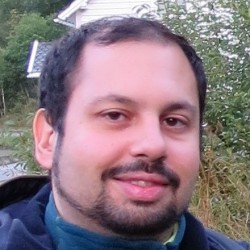
Arman Savran
Arman Savran received PhD and MSc in Electrical and Electronics Engineering at Boğaziçi University in 2010 and 2004, respectively, and BSc in Electronics and Communication Engineering at Istanbul Technical University in 2002.
During his graduate studies in BUSIM, he did his MSc thesis on speech and text driven 3D face synthesis, and his PhD thesis on 3D facial action unit detection. In 2010, he received the Selçuk Halaç PhD Award as well as two best student paper awards. He worked as a research engineer at Sestek Inc. from 2004 to 2006. He was a postdoctoral researcher at the University of Pennsylvania in the Section for Biomedical Image Analysis, Philadelphia, USA, from 2011 to 2015, where he worked on quantification of emotions for neuropsychiatry through facial and audio-visual analysis. He received awards for his algorithm winning first place in the scientific challenge “International Continuous Audio/Visual Emotion Recognition Grand Challenge”, which is a competition sponsored by Association for Computing Machinery (ACM), Los Angeles, USA, in 2012. He was a postdoctoral researcher at Italian Institute of Technology in the iCub Humanoid Laboratory, Genova, Italy, from 2015 to 2018, where he worked on event-driven compressive vision for multimodal interaction with mobile devices.
Since 2020, he has been a faculty member in the Department of Computer Engineering at Yaşar University, İzmir, Turkey. His research is in the computer vision and machine learning fields, with research interests including facial analysis/synthesis/recognition, vision by neuromorphic cameras, deep neural networks and computation efficient methods.
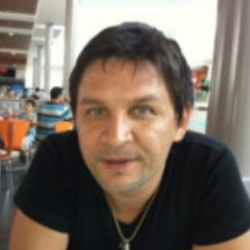
Hakan Karaca
Hakan Murat Karaca received his B.Sc. degree from Istanbul technical University in 1996 (high honor), M.Sc. degree from Boğaziçi University in 2000 and, Ph.D. degree from Dokuz Eylül University in 2010. His Ph.D. thesis titled "Proposal of an Auction-based Channel Allocation Approach In Wireless Networks" was supervised by Prof. Emin Anarım. During graduate studies, he developed channel allocation mechanism for cognitive radio secondary users under collusion constraint. He is working as an Assistant Professor in the Computer Engineering Department of Celal Bayar University. He worked many years as R&D engineer in industry. He is also acting as a consultant for various telecommunications companies. His current research interests are in the field of cognitive radio, wireless communications, IoT, python, green communications.
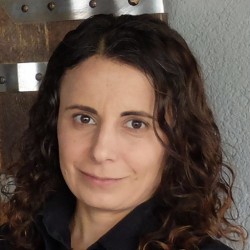
Helin Dutağacı
Helin Dutağacı received the B.S., M.S., and Ph.D. degrees from the Electrical and Electronics Engineering Department, Boğaziçi University, Istanbul, Turkey, in 1999, 2002, and 2009, respectively. During her graduate studies, she worked as a research assistant at Boğaziçi University Signal and Image Processing Laboratory (BUSIM). She worked as a Guest Researcher at National Institute of Standards and Technology (NIST), Maryland, USA from 2008 to 2011. Since 2012, she has been working as an assistant professor at the Electrical and Electronics Engineering Department, Osmangazi University, Eskişehir, Turkey. She also worked as a visiting scientist at University of Angers and INRAe, Angers, France from 2018 to 2020. Her research interests include computer vision, 3D shape reconstruction and analysis, and deep learning for 3D point cloud processing. She is currently working on computer vision techniques for plant sciences and agriculture.

Ebru Arısoy
Ebru Arisoy received the B.S., M.S., and Ph.D. degrees from the Electrical and Electronics Engineering Department, Boğaziçi University, Istanbul, Turkey, in 2002, 2004, and 2009, respectively. During her graduate studies, she worked as a research assistant at Boğaziçi University Signal and Image Processing Laboratory (BUSIM). She was awarded with the Ph.D. Thesis Award of the Bogazici University Research Fund (2010) and Serhat Özyar Young Scientist Honor Award (2010) for her Ph.D. dissertation. Her first job was the position of Post-Doctoral Researcher at IBM T. J. Watson Research Center, Yorktown Heights, NY from 2010 to 2013. Since 2014, she has been working as an assistant professor in the Electrical and Electronics Engineering Department at MEF University, Istanbul, Turkey where she served as department chair between 2014-2017. Her research interests include automatic speech recognition, statistical language modeling, spoken question answering and speech and language processing for educational technologies. Dr. Arisoy is an elected member of the IEEE Signal Processing Society Speech and Language Technical Committee for the 2020-2022 term.
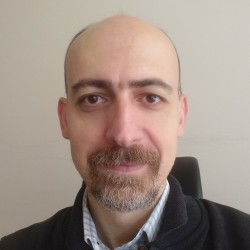
Koray Kayabol
Koray Kayabol was a member of BUSIM Laboratory between 2007-2008. He received the B.Sc., M.Sc., and Ph.D. degrees in electrical and electronics engineering from Istanbul University, Istanbul, Turkey in 1997, 2002 and 2008, respectively. He was a research assistant in Electrical and Electronics Eng. Dept. at Istanbul University between 2001 and 2008. From 2008 to 2010, he was an ICTP Postdoctoral Fellow in the ISTI at CNR, Pisa, Italy. In 2010, he was awarded as an ERCIM Postdoctoral Fellow. Between September 2010 and April2012, he spent his ERCIM fellowship periods in the Ariana Research Group at INRIA, Sophia Antipolis, France and in the Probability and Stochastic Networks Group at CWI, Amsterdam, Netherlands. Between 2012 and 2013, he was a TUBITAK returning scholar postdoctoral fellow in Electronics and Communications Eng. Dept. at Istanbul Technical University (ITU), Turkey. He is currently an Associate Professor of Electronics Engineering at Gebze Technical University (GTU), Kocaeli, Turkey. Between 2018 and 2019, he served as a Vice Dean of Faculty of Engineering at GTU. He is an associate editor of Digital Signal Processing since 2011 and a reviewer for more than 10 journals including IEEE Transaction on Image Processing, Pattern Recognition, IEEE Transactions on Cybernetics, Transaction on Geoscience and Remote Sensing, IEEE Signal Processing Letters. He has served as a reviewer in ICIP and ICASSP since 2012. His research interests include detection, estimation, classification applications in statistical signal/image processing, Bayesian methods as Markov chain Monte Carlo and variational inference, latent variable analysis. His current research focuses on deep encoder-decoder networks, variational autoencoders and generative adversarial networks. Application domains of his research are remote sensing, synthetic aperture radar and multi/hyper-spectral images and surveillance videos.
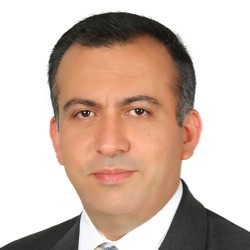
Mete Yeğiner
Mete Yeğiner received the BS (1999) degree in Physics and the MS (2002) and PhD (2008) degrees in Biomedical Engineering at the Bogazici University. He focused on the machine learning algorithms for characterization and classifications of adventitious respiratory sounds for assisting the physicians in decision making of pathological conditions of patients during his graduate studies under the supervision of Prof. Dr. Yasemin Kahya. He worked as a research assistant in the Lung Acoustics Laboratory (LAL) at the Bogazici University between 2000 and 2008. He joined in University of Illinois at Chicago as a postdoctoral research associate and worked on the first clinical application of linear accelerator-based total marrow irradiation (TMI) as a conditioning regimen after bone marrow transplantation under the supervision of Prof. Dr. Bulent Aydogan. He has been an assistant professor in the department of Radiation Oncology at the Hacettepe University and a co-director of graduate programs of the radiotherapy physics since 2012. His research interests include small-field dosimetry, image-guided radiotherapy, stereotactic radiotherapy, machine learning for pattern classification and clustering. ORCID: 0000-0001-8001-4522; ReseacherID: I-8523-2013.
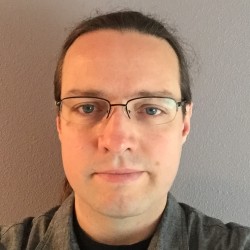
Oytun Türk
Oytun Türk received BS(2000), MS(2003), and PhD(2007) degrees in Electrical and Electronics Engineering at Bogazici University, Istanbul, Turkey. His expertise covers speech and audio signal processing, machine learning and deep learning.
He was a co-founder of Sestek A.S where he worked as a research scientist and then as a scientific project manager to develop commercial voice conversion technology. He participated in TÜBİTAK and European Union projects. He joined DFKI, Germany in 2007 as a researcher to apply voice conversion techniques for expressive style, prosody, and speaker identity adaptation and interpolation in text-to-speech synthesis (TTS) contributing to the open source MARY TTS platform. In 2009, he joined Sensory Inc, USA as technical lead of the TTS team which develops lightweight embedded TTS solutions covering many languages. He currently works as a senior research technologist at Sensory driving the TTS technology development effort in both embedded and high quality end-to-end deep learning domains. He also contributes to Sensory's in-house speech recognition technology in language modeling, tuning, optimization, and data augmentation for both large vocabulary and voice trigger detection solutions. Oytun Türk co-authored over 25 publications in speech and audio processing and serves regularly as a reviewer for major speech and signal processing journals and conferences.
Ceyhun Burak Akgül
Dr. Ceyhun Burak Akgül, one of the two founders and COO of Vispera, is a PhD in computer vision and machine learning with 10+ years of academic/industrial R&D and industrial product development experience. Vispera Information Technologies is an Istanbul-based automated visual search company, aiming to solve business problems in the retail sector via computer vision and machine learning. Ceyhun is also a shareholder and technical advisor in Flavourspace BV, an Amsterdam-based intelligent food search start-up. He was previously R&D Director at Vistek ISRA Vision (Istanbul, Turkey) from 2012 to 2014. He planned, coordinated and contributed to the design and development of several computer vision-based industrial automation systems and was the principal investigator of FP7 Dem@Care, FP7 ITEA2 Vicomo, FP7 CA JADE projects during his time at Vistek. In addition to his industrial activities, Dr. Akgül is also Adjunct Professor and Senior Research Associate at the EE Dept., Bogazici University and Visiting Faculty at the Digital Architectural Design Program, Istanbul Technical University. During 2008-2009, he was Marie Curie postdoctoral fellow at Philips Research Europe (Video Processing and Analysis Group) in the framework of FP6 IRonDB project where he filed a patent on automated diagnosis of age-related mental disorders from MR images and metadata. Dr. Akgül obtained his PhD from both Télécom ParisTech Signals-Images (Paris, France) and Boğaziçi University EE Dept. (2007) under the supervision of Prof. Bulent Sankur and Prof. Francis Schmitt. During his Ph.D., he developed state-of-the-art shape description, similarity learning and intelligent visual search algorithms for content-based 3D object retrieval, published in top AI journals such as PAMI and IJCV. His research and technology interests are focused on computer vision and machine learning with applications in image recognition, content-based visual search and retrieval, edge AI, digital architecture and urban analytics. He published six journal and 50+ conference papers as well as three patents in these domains. Together with Prof. Aytul Ercil, he has been awarded as Entrepreneur of the Year in Turkey in 2018 by Ernst and Young.
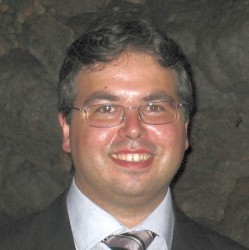
Deniz Gençağa
Deniz Gençağa received the Ph.D degree in Electrical and Electronic Engineering from Boğaziçi University in 2007. Same year, he joined State University of New York at Albany, as a postdoctoral researcher. (Department of Physics | University at Albany, Lab: knuthlab). Between 2009 and 2011, he was a research associate at the NOAA Center for Earth System Sciences & Remote Sensing Technologies Center of the City University of New York, USA. Until 2017, he took roles in inter-disciplinary projects at universities, including the Department of Space Sciences at the University of Texas at Dallas, and the Robotics Institute of Carnegie Mellon University. Between 2012 and 2014, he worked as a senior statistical scientist at the Alcoa Technical Center in Pittsburgh, USA. During his presence in Pittsburgh, he was selected as the chair of IEEE Pittsburgh signal processing and control systems societies. Since 2017, he has been an Assistant Professor at the Electrical and Electronics Engineering department of the Antalya Bilim University. He is the editor of the book, titled Transfer Entropy, a member of the editorial board of Entropy journal, an inventor in two US patents and recipient of NATO research fellowship in Italy. He is the general chair of the first ECEA and one of the organizers of MaxEnt 2007 conference, a senior member of IEEE, a member of the American Statistical Association and Association for Computing Machinery. His research interests include statistical signal processing, information theory, Bayesian inference, uncertainty modeling, causality analysis and machine learning.
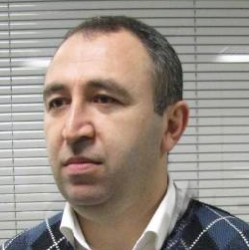
Hamza Özer
Hamza Özer received B.S., M.S., and Ph.D. degrees all in Electrical and Electronics Engineering Departments from Middle East Technical University, Başkent University, and Boğaziçi University in 1996, 1998, and 2005, Turkey, respectively. He completed his Ph.D. study under supervision of Prof. Dr. Bülent Sankur about audio watermarking, steganography and audio hashing.
From 1996 to 1999 he was with the Department of Electrical and Electronics Engineering at the Başkent University as a research assistant. Since June 1999 he work as researcher/developer, system engineer, project manager, lab manager and Institute manager at TÜBİTAK Informatics and Information Security Research Center (TÜBİTAK BİLGEM). His research interest are signal processing and applications, software defined radio (SDR) applications, data hiding, audio watermarking, robust audio hashing, time-frequency signal analysis, speech processing, digital signal processors (DSPs and FPGAs), image processing, SIGINT, electronic intelligence, radar signal processing, development of test and measurement plan and setup. He took part in various projects such as Electronic Intelligence, SDR, Information Security, Surveillance Radars etc. He is currently deputy director of Information Technologies Institute under TÜBİTAK BİLGEM, responsible from Cloud Computing and Big Data Research Lab, Image Exploitation and Broadcasting Systems Lab, Speech and Language Technologies Lab and Border and Homeland Security Support Systems.
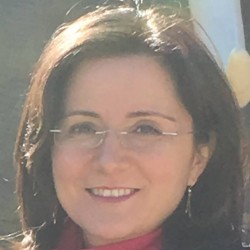
Çiğdem Eroğlu Erdem
Çiğdem Eroğlu Erdem received the B.S. and M.Sc. degrees in Electrical and Electronics Engineering from Bilkent University, Ankara, Turkey in 1995 and 1997, respectively, with high honors. She received the Ph.D. degree in Electrical and Electronics Engineering from Bogazici University, Istanbul, Turkey, in 2002 (under the supervision of Prof. Dr. Bülent Sankur and Prof. Dr. Emin Anarım). From September 2000 to June 2001, she was a visiting researcher in the Department of Electrical and Computer Engineering, University of Rochester, NY, USA. Between 2003-2004, she was a postdoctoral fellow at the Faculty of Electrical Engineering at Delft University of Technology, the Netherlands, where she was also affiliated with the video processing group at Philips Research Laboratories, Eindhoven. Between 2002-2009, she was the director of research at Momentum Digital Media Technologies Inc., a technology SME located in İstanbul. Between 2009-2016, she was a faculty member in the Department of Electrical and Electronics Engineering at Bahçeşehir University, Istanbul, Turkey. Since Sep. 2016, she is a full professor in the Department of Computer Engineering at Marmara University, Istanbul, Turkey, where she is the head of Computer Sciences division. Prof. Erdem’s current research interests are in the areas of digital image and video processing, computer vision and pattern recognition, with applications to affective computing, motion estimation, video segmentation, object tracking, human computer interaction, and physiological signal estimation. She received the best paper award at EUSIPCO 2000 and project performance award from TÜBİTAK in 2019. She served as a reviewer for numerous technical journals and conferences including IEEE Transactions on Image Processing, IEEE Transactions on Circuits and Systems for Video Technology, Pattern Recognition, Signal Processing: Image Communication, Image and Vision Computing. She also served as an independent expert and vice chair during project evaluations for the European Commission.
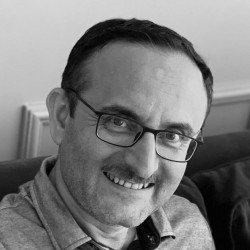
Mehmet Sezgin
Mehmet Sezgin is a resilient hard worker who puts a lot of effort and energy into his work and everything he does. He received his B.Sc. and M.Sc. degrees in the Electronic and Communication Engineering department of Istanbul Technical University in 1986 and 1990, then completed his PhD in 2002 under the co-supervision of Prof Dr. Bülent Sankur at BUSIM.
He enjoys to look at things from different perspectives and look beyond what exists when coming up with new ideas, inventions and approaches. He completed numerous industrial, governmental and military projects as researcher and Project Leader. His research areas are; image processing signal processing, ground penetrating radar, multi-sensor system design and automatic detection & classification of buried objects.
There are various patent applications with the name of Mehmet Sezgin and he is also the author/co-author of more than 50 highly cited papers printed in SCI journals and numerous scientific conference papers. His papers have more than 6,200 citations on Google Scholar by Jan’21.
He served as national delegate to more than 30 NATO SCI experts, NATO projects and working group meetings between 1999-2013. The Modern Mine Detection Systems project, which was completed by the leadership of Mehmet Sezgin, was awarded by TÜBİTAK MAM in 2006. He served at TÜBİTAK MAM and TÜBİTAK BİLGEM as Researcher, Senior Researcher and Chief Researcher, Department Manager, Deputy Director and Institute Director (TUBITAK MAM - Marmara Research Center, TUBITAK UEKAE - National Research Institute of Electronics and Cryptology, TUBITAK BILGEM - Center Of Research For Advanced Technologies Of Informatics And Information Security).
He conducted portfolio of TÜBİTAK BİLGEM Information Technologies Institute between 2014 and 2017, as Institute director. He worked as Consultant at TÜBİTAK BİLGEM between 2017-2020, still continues his duty as Chief Researcher at BİLGEM.
He is passionate about developing people so that they can become their best selves and always encourages (especially young) people to get out of their comfort zones in ways that will help them to grow and develop.
As associate professo, he is giving graduate-level courses at Gebze Technical University and Yıldız Technical University and has been reviewing processes of various scientific journals.
He believes future is ours to build.
İsmail Avcıbaş
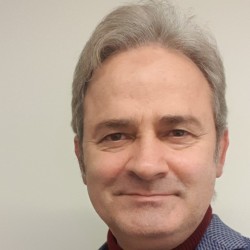
İsmail Avcıbaş received the PhD degree from the Department of Electrical and Electronics Engineering, Boğaziçi University in 2001 under the supervision of Professor Bülent Sankur. With a scholarship from The Scientific Council of Turkey TÜBITAK he visited the Department of Computer and Information Science, Polytechnic University, Brooklyn, NY, in 1999–2000 and did research on image compression and steganalysis. Prior to joining the Department of Electrical and Electronics Engineering, Üsküdar University, he served as an assistant professor with the Department of Electronics Engineering, Uludağ University, as an associate professor with the Department of Electrical and Electronics Engineering, Başkent University. Dr. Avcıbaş’s research interests are in information forensics and security. He pioneered the development of universal steganalysis techniques and served as a consultant to Air Force Office of Scientific Research (AFOSR), Air Force Research Laboratory (AFRL) and TÜBİTAK. His research projects on multimedia forensics have been supported by TÜBITAK and NSF.